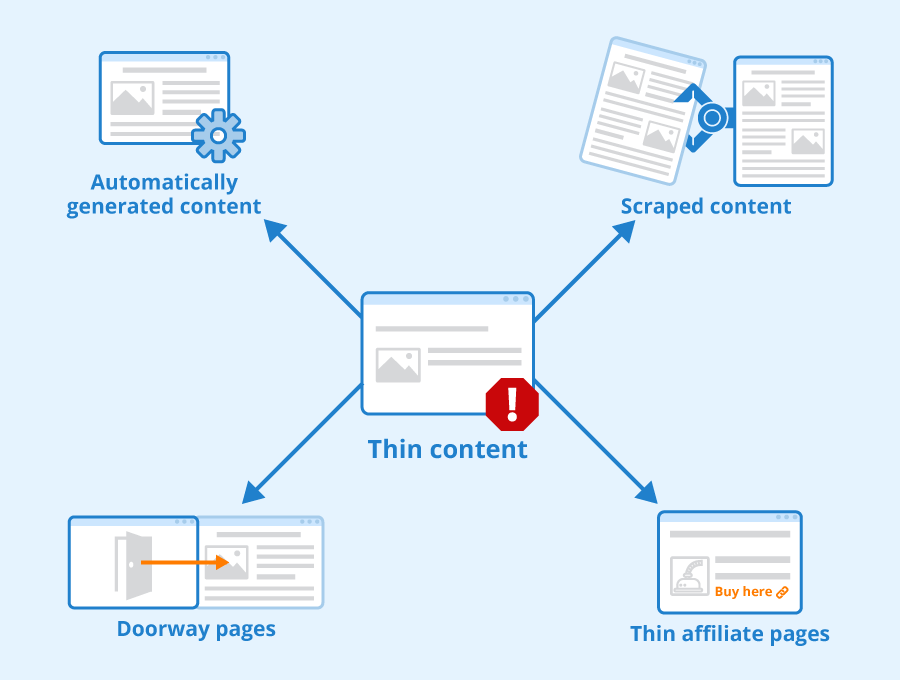
Thin content refers to pages that provide little or no value to users. These pages often have very low word count, poor information, or duplicate content, which can negatively impact search rankings.
This beginner guide explains how to identify and fix thin content issues to improve website SEO.
What Is Thin Content?
Thin content includes pages with insufficient information, shallow explanations, or content created mainly for search engines rather than users.
Why Thin Content Hurts SEO
- Provides poor user experience
- Reduces trust and authority
- Weakens overall site quality
- Limits ranking potential
How to Identify and Fix Thin Content

1. Identify Thin Pages
Look for pages with very low traffic, low engagement, or minimal content.
2. Improve Content Depth
Add detailed explanations, examples, and useful information.
3. Match Search Intent
Ensure the content answers the exact question users are searching for.
4. Combine Similar Pages
Merge overlapping thin pages into a single strong resource.
5. Remove Low-Value Pages
Delete or noindex pages that serve no purpose.
6. Improve Readability
Use headings, bullet points, and visuals to enhance clarity.
7. Add Internal Links
Link thin pages to relevant, authoritative content.
8. Optimize Images and Media
Add relevant images or charts to support content.
9. Update Content Regularly
Keep pages fresh with updated information.
Common Thin Content Sources
- Tag and category pages
- Auto-generated pages
- Short blog posts
- Duplicate pages
How to Prevent Thin Content
- Focus on quality over quantity
- Plan content topics carefully
- Regularly audit your website
Final Thoughts
Fixing thin content improves your website’s overall quality and SEO performance. By creating helpful, in-depth content, you build trust with users and search engines alike.
Quality content is the foundation of long-term SEO success.