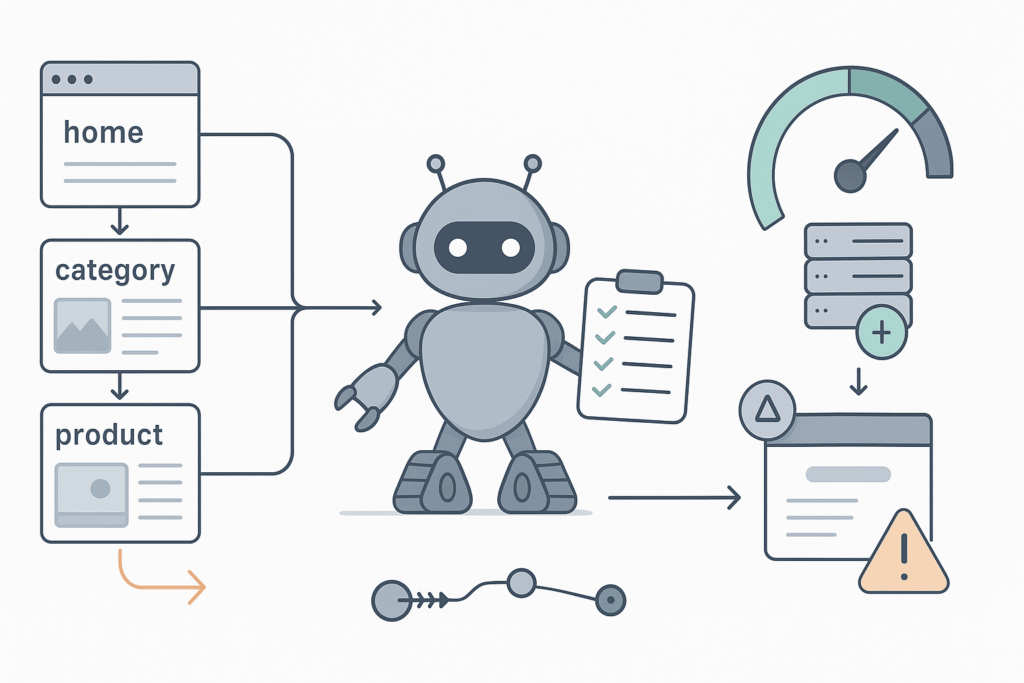
Crawl budget refers to the number of pages search engines crawl on your website within a given timeframe. For large websites, crawl budget optimization is essential to ensure important pages are discovered and indexed.
This advanced guide explains how to improve crawl budget for large websites and prevent wasted crawl resources.
What Is Crawl Budget?
Crawl budget is influenced by how often search engine bots crawl your site and how many URLs they crawl during each visit.
Why Crawl Budget Matters for SEO
- Ensures important pages are indexed
- Improves crawl efficiency
- Prevents wasted crawl resources
- Supports faster ranking updates
How Crawl Budget Works on Large Websites
Crawl Demand
Crawl demand depends on site popularity and content freshness.
Crawl Rate Limit
Crawl rate is affected by server performance and response time.
Step-by-Step Guide to Improve Crawl Budget
Step 1: Remove Low-Value Pages
Identify thin, duplicate, or outdated pages and remove or noindex them.
Step 2: Fix Broken Links
Broken links waste crawl resources and reduce efficiency.
Step 3: Optimize Internal Linking
Ensure important pages receive strong internal links.
Step 4: Control Indexing With Robots.txt
Block crawling of unimportant URLs.
Step 5: Use Noindex Strategically
Noindex pages that should not appear in search results.
Step 6: Improve Page Speed
Fast-loading pages encourage more frequent crawling.
Step 7: Reduce URL Parameters
Excessive parameters create crawl traps.
Step 8: Optimize XML Sitemaps
Include only important, indexable URLs.
Step 9: Monitor Crawl Stats
Track crawl activity regularly to detect issues early.
Common Crawl Budget Mistakes
- Indexing tag and filter pages unnecessarily
- Ignoring crawl errors
- Publishing too many low-value pages
How to Know If You Have Crawl Budget Issues
- Slow indexing of new content
- Important pages not indexed
- High crawl activity on unimportant URLs
Final Thoughts
Crawl budget optimization becomes critical as your website grows. By focusing crawl resources on high-value pages, you help search engines understand what truly matters.
Efficient crawling leads to faster indexing and stronger SEO performance.