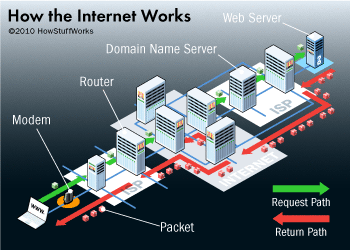
The internet is one of the most important technologies in human history, yet many people use it daily without understanding how it actually works. Behind every website, email, and online service lies a massive global infrastructure.
This article explains how the internet works, the infrastructure that powers it, and how data moves from one device to another across the world.
What Is the Internet?
The internet is a global network of interconnected computers and servers that communicate using standardized protocols. It allows devices worldwide to exchange data instantly.
Rather than being a single entity, the internet is a collection of networks owned and operated by governments, companies, and organizations.
Why the Internet Was Created
The internet originated as a way to share information reliably between distant computers. Over time, it evolved into a global communication platform supporting commerce, education, entertainment, and innovation.
Core Components of Internet Infrastructure
- Servers and data centers
- Internet Service Providers (ISPs)
- Undersea and terrestrial cables
- Routers and switches
- Internet exchange points (IXPs)
Servers and Data Centers
Servers are powerful computers that store websites, applications, and data. Data centers house thousands of servers and ensure reliable access through power backups and cooling systems.
Role of Internet Service Providers (ISPs)
ISPs connect homes and businesses to the broader internet. They manage local networks and route traffic to other networks worldwide.
Undersea Cables and Global Connectivity
Most international internet traffic travels through undersea fiber-optic cables. These cables form the backbone of global internet connectivity.
How Data Travels Across the Internet
Step 1: User Request
When a user enters a website address, their device sends a request to the network.
Step 2: Domain Name Resolution
The request is translated into an IP address using domain name systems.
Step 3: Routing Through Networks
Routers direct data packets through multiple networks toward the destination server.
Step 4: Server Response
The server processes the request and sends data back to the user.
What Are Internet Protocols?
Internet protocols define how data is transmitted. Common protocols include TCP/IP, HTTP, and HTTPS.
Difference Between Internet and World Wide Web
| Internet | World Wide Web |
|---|---|
| Network infrastructure | Websites and web pages |
| Hardware and connections | Online content |
How Websites Are Hosted
Websites are stored on servers provided by hosting companies. These servers deliver website content to users upon request.
Internet Speed and Performance
Internet speed depends on bandwidth, latency, network congestion, and server performance.
Security Within Internet Infrastructure
Security measures such as encryption and firewalls protect data as it travels across networks.
Challenges Facing Internet Infrastructure
- Growing data demand
- Cybersecurity threats
- Infrastructure costs
- Network congestion
The Future of Internet Infrastructure
Emerging technologies such as faster fiber networks, satellite internet, and edge computing continue to reshape internet infrastructure.
Common Misconceptions About the Internet
- The internet is wireless everywhere
- Data travels in a straight line
- All data is stored in one place
Final Thoughts
The internet is a complex but resilient system built on global cooperation and advanced infrastructure. Understanding how it works provides insight into the technology that powers modern life.
Behind every click lies a vast network working silently at incredible speed.